
Quick Summary
- The dawn phenomenon is a natural early-morning hormonal response that can cause blood glucose to rise before you wake up.
- High morning blood sugar can also be related to insulin resistance, medication timing, late meals, illness, stress, poor sleep, or other factors.
- A single high reading does not diagnose diabetes. Repeatedly elevated fasting glucose should be evaluated with appropriate testing and medical guidance.
Table of Contents
- 1. Why Does Blood Sugar Rise in the Morning?
- 2. What Is the Dawn Phenomenon?
- 3. What Else Can Cause High Morning Blood Sugar?
- 4. What About the Somogyi Effect?
- 5. How Can You Tell What Is Causing Your High Morning Sugar?
- 6. What Should You Do If Your Morning Blood Sugar Is High?
- 7. When Should You See a Doctor?
- 8. Key Takeaways
- 9. The Bottom Line
Why Does Blood Sugar Rise in the Morning?
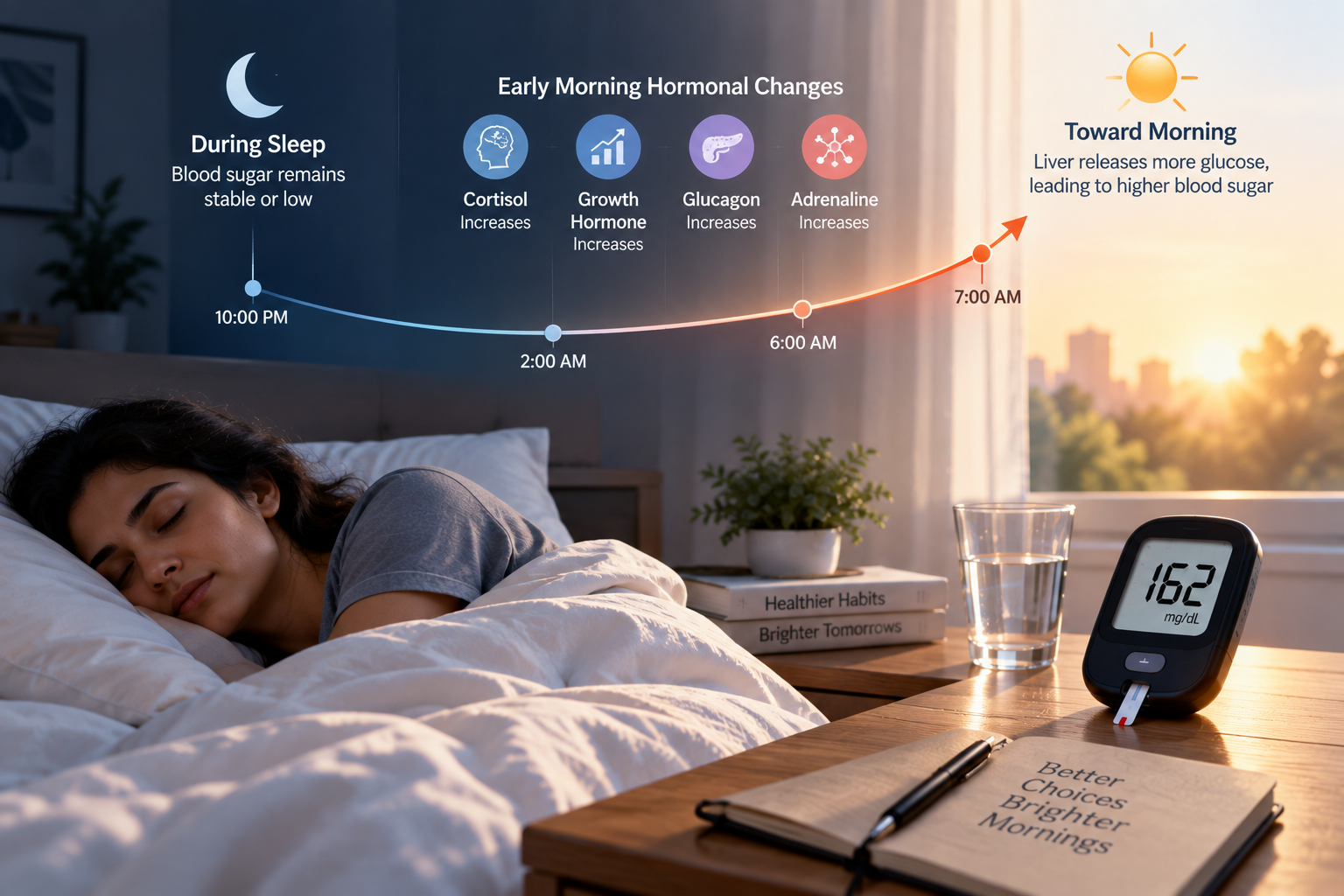
Blood glucose does not remain completely stable throughout the night.
Even while you are asleep and not eating, your body needs a continuous supply of glucose for the brain and other organs. The liver therefore releases glucose into the bloodstream.
Insulin helps regulate this process by allowing glucose to move into cells and by suppressing excessive glucose production by the liver.
When insulin is insufficient or the body's tissues become less responsive to it, glucose regulation becomes less efficient. As a result, blood sugar may gradually rise overnight or become elevated toward morning.
This becomes particularly noticeable in people with diabetes or insulin resistance.
What Is the Dawn Phenomenon?
The dawn phenomenon refers to a rise in blood glucose that occurs during the early morning hours, commonly between approximately 4 a.m. and 8 a.m.
As your body prepares to wake, hormones including cortisol, growth hormone, glucagon and adrenaline increase as part of normal physiological regulation. These hormones help make energy available to the body and can signal the liver to release more glucose.
In a person with healthy glucose regulation, insulin generally keeps this increase under control.
When insulin sensitivity is reduced or insulin production is inadequate, however, the same hormonal changes can result in a more pronounced rise in blood glucose.
This is why you may go to bed with an acceptable glucose level and still wake up with a higher reading.
A morning glucose rise is not necessarily a sign that you did something wrong the previous night.
What Else Can Cause High Morning Blood Sugar?
The dawn phenomenon is important, but it is not the only explanation. Several factors can produce elevated morning glucose.
1. Your Medication May Not Be Covering the Whole Night
For people taking insulin or other glucose-lowering medications, the timing and duration of treatment can influence overnight glucose.
If medication does not provide sufficient glucose-lowering effect through the entire night, blood sugar may rise toward morning.
This does not mean that medication should be increased independently. Treatment changes should be based on the overall glucose pattern and made with guidance from your healthcare professional.
2. A Late or Large Evening Meal
The timing and composition of your evening meal can affect glucose for several hours.
A large meal or a meal containing a substantial amount of rapidly absorbed carbohydrate may result in prolonged post-meal glucose elevation. A late-night snack can have a similar effect.
However, this does not mean that carbohydrates need to be eliminated from dinner. The appropriate amount and distribution of carbohydrate depends on your overall diet, health, medications and individual glucose targets.
3. Insulin Resistance
Insulin resistance can contribute significantly to elevated fasting glucose.
When the body's cells become less responsive to insulin, the pancreas initially compensates by producing more insulin. Blood glucose may remain relatively normal during this stage.
Over time, however, the pancreas may no longer be able to compensate adequately. Glucose levels can then begin to rise, including during the fasting period.
This is one reason morning glucose can gradually become higher over months or years rather than changing suddenly.
4. Stress and Poor Sleep
Stress and inadequate sleep can affect glucose regulation.
Stress-related hormones can increase glucose availability in the bloodstream, while insufficient or disrupted sleep can reduce insulin sensitivity in some people.
This does not mean that every case of high morning glucose is caused by high cortisol. Glucose regulation involves multiple hormones and metabolic processes.
Persistent sleep problems also deserve attention. Loud snoring, witnessed pauses in breathing, morning headaches and excessive daytime sleepiness can be signs of obstructive sleep apnea, which is associated with impaired metabolic health.
5. Illness or Infection
Blood sugar can temporarily increase when you are sick.
During infection, fever, inflammation or other physiological stress, the body releases hormones that help it respond to the illness. These hormonal changes can increase glucose production and reduce insulin sensitivity.
If your glucose suddenly becomes more difficult to control while you are unwell, the illness itself may be contributing to the change.
6. Dehydration
Dehydration can also influence glucose readings and may contribute to higher blood glucose, particularly when fluid losses are significant.
It is unlikely to explain persistent morning hyperglycemia on its own, but maintaining adequate hydration is an important part of overall metabolic health.
What About the Somogyi Effect?
You may have heard that high morning blood sugar is caused by the Somogyi effect, sometimes described as rebound hyperglycemia.
The proposed explanation is that blood sugar falls too low during the night, triggering hormones that subsequently cause glucose to rise by morning.
However, this explanation has been questioned by more recent glucose-monitoring research and should not automatically be assumed whenever morning glucose is high.
If overnight hypoglycemia is suspected, the better approach is to determine what your glucose is actually doing during the night. Continuous glucose monitoring can be particularly useful for identifying these patterns.
This is important because changing insulin or other medication without understanding the overnight pattern could potentially make nocturnal hypoglycemia worse.
How Can You Tell What Is Causing Your High Morning Sugar?
A single morning reading usually cannot tell you why your glucose is elevated.
Your healthcare professional may look at:
- Your glucose before going to bed
- Overnight glucose patterns
- Morning fasting glucose
- HbA1c
- Medication type, dose and timing
- Evening meals and snacks
- Physical activity
- Sleep quality
- Recent illness or infection
- Other medical conditions
For some people, continuous glucose monitoring (CGM) can provide particularly useful information because it shows how glucose changes throughout the night rather than giving you only one reading after waking.
The goal is to identify the pattern rather than simply treating the morning number in isolation.
What Should You Do If Your Morning Blood Sugar Is High?

There is no single remedy that works for everyone because the underlying cause matters.
Keep Your Evening Routine Consistent
If you notice that late or unusually large meals are followed by higher morning glucose, discuss your meal timing and composition with your doctor or dietitian.
The goal should be a sustainable eating pattern rather than unnecessary restriction.
Stay Physically Active
Regular physical activity improves insulin sensitivity and can help with overall glucose control.
A combination of aerobic activity and resistance exercise is generally beneficial for metabolic health, although the appropriate exercise plan depends on your individual health and medications.
Prioritize Sleep
Consistent, adequate sleep supports healthy metabolic regulation.
If you regularly sleep poorly or have symptoms suggestive of sleep apnea, address the underlying sleep problem rather than assuming that morning glucose is simply a dietary issue.
Take Medication as Prescribed
If you have diabetes, do not independently increase, decrease or change the timing of your medication because of a high morning reading.
Your clinician needs to consider your complete glucose pattern, HbA1c, medication regimen and risk of hypoglycemia before making treatment changes.
When Should You See a Doctor?
Occasional variation in blood glucose is normal. Persistent elevation deserves more attention.
Consider speaking with a healthcare professional if:
- Your fasting glucose is repeatedly elevated.
- Your morning readings are gradually increasing.
- You have symptoms such as excessive thirst, frequent urination, unexplained weight loss or persistent fatigue.
- You have diabetes and your usual glucose pattern has changed.
- You suspect your blood sugar is dropping during the night.
- You are taking insulin or medications that can cause hypoglycemia and are experiencing unusual morning readings.
A single home glucose-meter result cannot diagnose diabetes. If diabetes or prediabetes is suspected, laboratory tests such as fasting plasma glucose, HbA1c, or an oral glucose tolerance test may be appropriate depending on the clinical situation.
Very high blood glucose accompanied by vomiting, severe weakness, abdominal pain, rapid or difficult breathing, confusion or significant dehydration requires urgent medical assessment.
Key Takeaways
- Morning blood sugar can rise even when you have not eaten overnight.
- The dawn phenomenon is a common physiological explanation for an early-morning glucose rise.
- Insulin resistance, medication timing, evening meals, illness, stress and poor sleep can also contribute.
- The Somogyi effect should not automatically be blamed for high morning glucose.
- A single home glucose reading does not establish a diagnosis of diabetes.
- Repeatedly high fasting glucose should be evaluated rather than managed through guesswork.
- Do not change diabetes medication or insulin doses without medical guidance.
The Bottom Line
Waking up with high blood sugar does not automatically mean that you ate the wrong food or failed to manage your diabetes properly.
Your body undergoes significant hormonal and metabolic changes in the hours before waking. For someone with impaired glucose regulation, those changes can produce a noticeable rise in blood glucose.
The important question is not simply How can I lower my morning sugar? but Why is my glucose rising overnight?
Once the underlying pattern is identified, treatment can be much more precise. If high morning glucose is becoming a regular pattern, discussing it with your healthcare professional can help determine whether the cause is the dawn phenomenon, medication-related, metabolic, lifestyle-related, or something that requires further investigation.
Medical Disclaimer: This article is intended for general educational purposes and does not replace an individual medical evaluation. Blood glucose targets and treatment decisions vary according to factors such as age, diabetes type, medications, pregnancy, kidney function and overall health. If you have diabetes or repeatedly abnormal glucose readings, consult your treating healthcare professional.