









What is Liver Transplant Surgery?
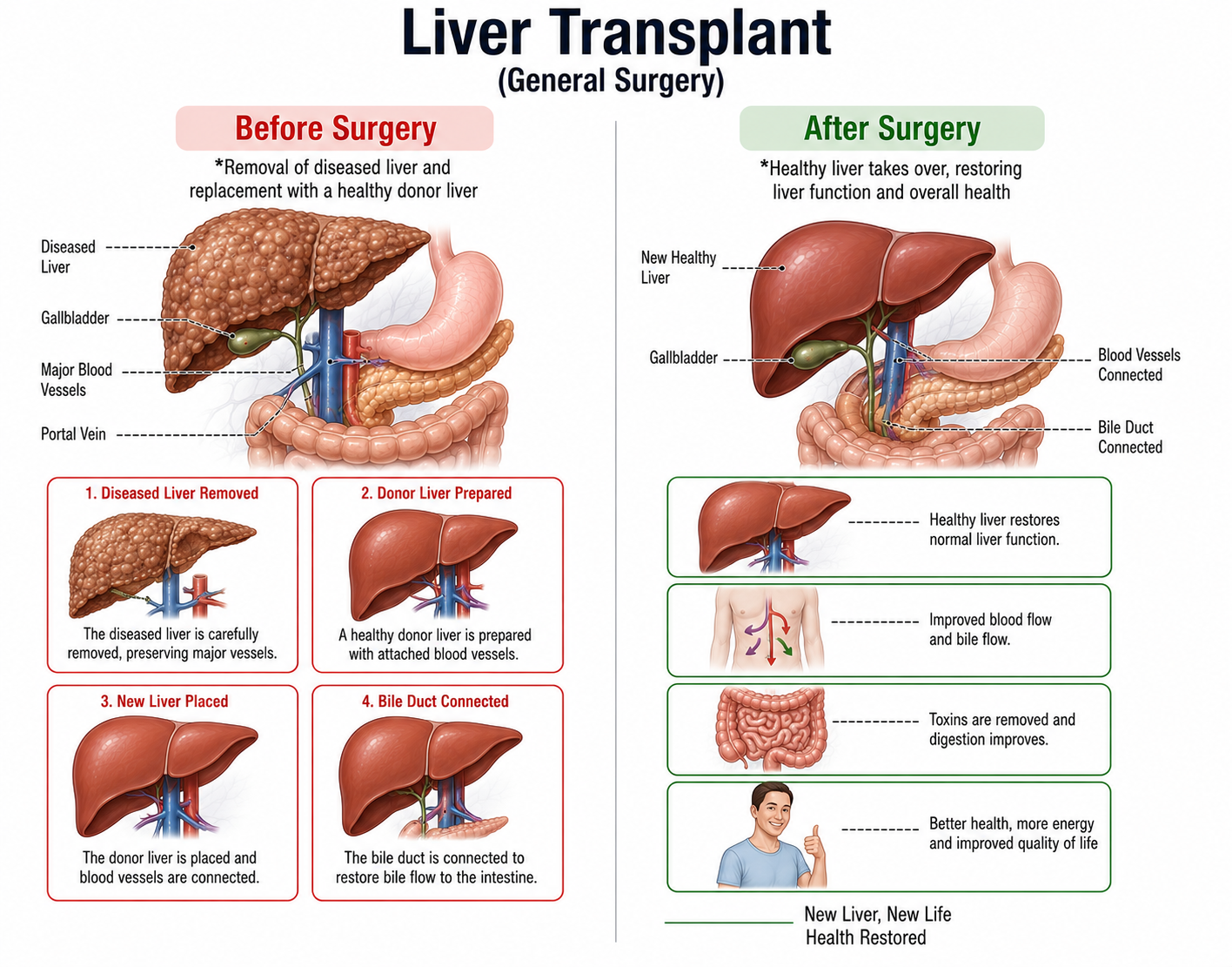
Liver transplantation is a life-saving surgical treatment for end-stage liver disease, irreversible cirrhosis, or acute liver failure. Because the liver performs vital metabolic, synthetic, and detoxifying functions, replacing a non-functioning liver restores normal bodily physiology.
Who Needs a Liver Transplant?
Transplantation is considered when medical therapy can no longer sustain health and liver failure progresses (measured via MELD/CTP scores).
Key clinical indications include:
- End-stage liver cirrhosis (caused by Hepatitis B/C, NASH/MASLD, or alcohol).
- Acute liver failure due to drug toxicity or fulminant viral hepatitis.
- Hepatocellular Carcinoma (liver cancer within organ-transplant criteria).
- Inborn metabolic liver disorders (e.g., Wilson's disease).
- Severe portal hypertension complications (recurrent variceal bleeding, intractable ascites).
Types of Liver Transplantation
- Living Donor Liver Transplant (LDLT): A healthy living donor (usually a blood relative) donates a portion (right or left lobe) of their liver, which regenerates to full size in both donor and recipient within weeks.
- Deceased Donor Liver Transplant (DDLT): A whole liver is retrieved from a brain-dead donor and transplanted into the recipient.
Benefits of Liver Transplantation
- Restores long-term life expectancy for patients with end-stage liver failure.
- Complete resolution of cirrhosis symptoms (jaundice, ascites, brain brain fog/encephalopathy).
- Return to active social, professional, and personal life.
- Curative treatment for localized liver cancer.
What to Expect Before Surgery?
Preparation is extensive and multidisciplinary:
- Comprehensive Evaluation: Cardiac, pulmonary, renal, infection, and psychological clearance.
- Donor Matching: Blood group compatibility, volumetric CT scans, and liver biopsy for living donors.
- Legal Authorization: Government-mandated authorization committee approval for living donor transplants.
Complete Procedure
- Simultaneous operations for recipient and living donor (in LDLT).
- Recipient incision (Mercedes-Benz or inverted-L shape across the upper abdomen).
- Dissection and removal of the recipient's diseased liver (hepatectomy).
- Placement of the donor liver graft into the anatomical position.
- Vascular anastomoses: Micro-surgical connection of hepatic veins, portal vein, and hepatic artery.
- Biliary reconstruction: Connecting the donor bile duct to recipient bile duct or intestine.
- Hemostasis check and abdominal closure.
What to Expect During Surgery?
The surgery is complex and typically takes 8 to 12 hours. A team of transplant surgeons, specialized anesthetists, and perfusionists monitor the patient continuous ICU transfer follows surgery.
Living Donor (LDLT) vs Deceased Donor (DDLT)
| Feature | Living Donor Transplant | Deceased Donor Transplant |
|---|---|---|
| Wait Time | Scheduled electively | Depends on organ waitlist availability |
| Graft Type | Partial liver (regenerates rapidly) | Full whole liver |
| Outcome | Excellent due to young healthy donor quality | Excellent, subject to cold ischemic time |
Success Rate and Safety
Modern liver transplantation yields a 1-year survival rate of 85-90% and a 5-year survival rate exceeding 75-80% in specialized transplant centers.
Liver Transplant Cost Estimate
| Component | Estimated Cost (INR) |
|---|---|
| Pre-Transplant Recipient & Donor Evaluation | ₹1,50,000 - ₹2,50,000 |
| Surgery & 3-Week Hospitalization (Inc. ICU) | ₹18,000,00 - ₹28,000,00 |
| Living Donor Surgery & Recovery | ₹3,00,000 - ₹5,00,000 |
| Monthly Immunosuppressant Meds (Post-Discharge) | ₹15,000 - ₹25,000 / month |
Recovery Guide & Post-Operative Care
Recovery Timeline
- Days 1-7: Intensive Care Unit (ICU) monitoring; gradual weaning from ventilator and drains.
- Weeks 2-3: Transition to organ isolation ward; physical rehabilitation and medication titration.
- Months 1-3: Strict home isolation to prevent infections; weekly blood tests (LFT, tacrolimus levels).
- Months 6+: Return to work and long-term maintenance lifestyle.
Post-Op Precautions & Care
- Immunosuppression Compliance: Lifelong strict adherence to anti-rejection medications.
- Infection Prevention: Avoid crowded places, raw foods, and unsterilized water during early post-op months.
- Regular Monitoring: Timely clinic follow-ups and blood level checks.
Frequently Asked Questions
How long does a transplanted liver last?⌄
A successful liver transplant can last for decades. Many recipients live healthy, active lives 20 to 30+ years post-transplant.
Is liver donation safe for a living donor?⌄
Yes, donor safety is the top priority. The liver regenerates back to nearly 90% of its original size within 6 to 8 weeks for both donor and recipient.
Will I need to take anti-rejection medicines forever?⌄
Yes, lifelong immunosuppressant medication is necessary to prevent your immune system from rejecting the new liver graft.
Who can be a living liver donor in India?⌄
A blood relative or close legal family member aged 18-55, with compatible blood type and healthy liver function, can donate.
How long is the recovery period after discharge?⌄
Most patients require 3 to 6 months of careful home recovery and isolation before resuming full normal routines.