







What is Paediatric Hernia Repair?
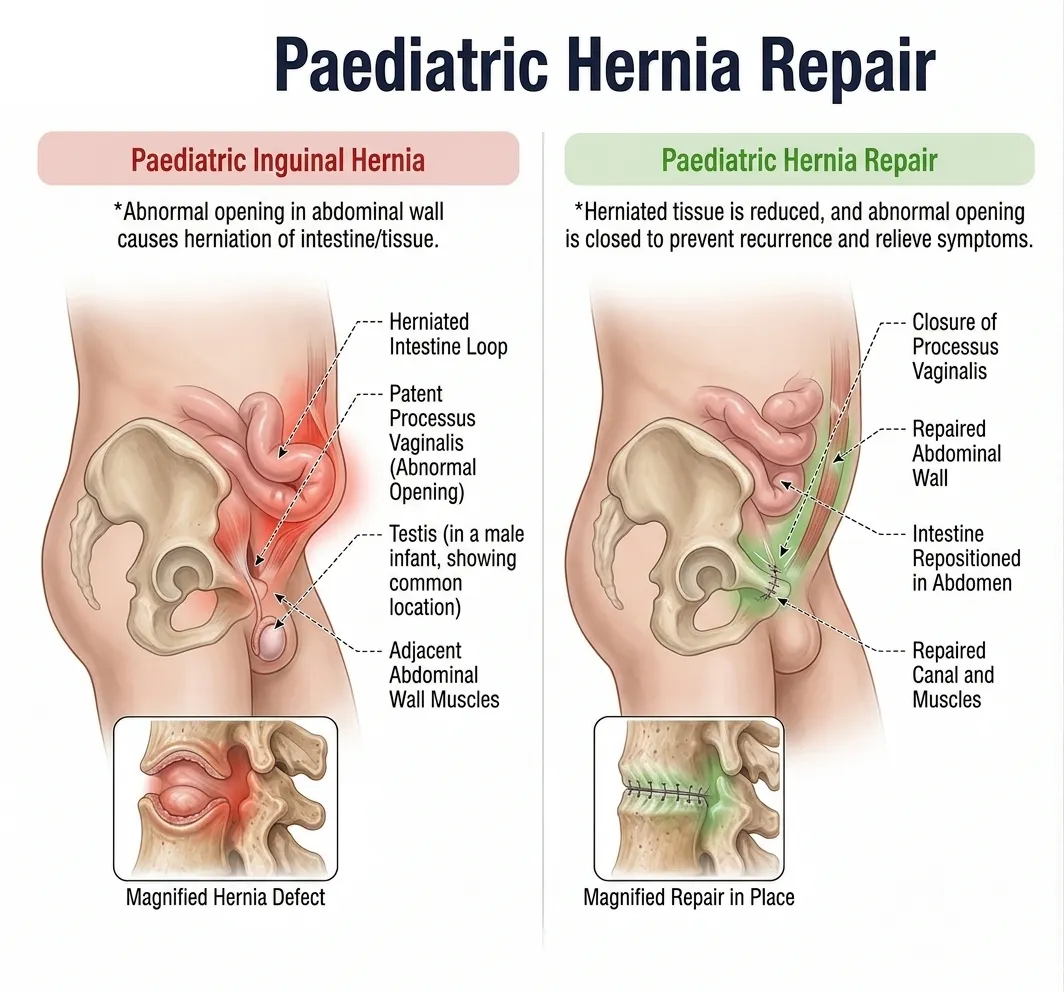
Paediatric hernia repair (herniotomy) is a surgical intervention performed to correct a congenital defect where abdominal tissue or bowel protrudes through a failure of normal closure in the abdominal wall or groin area (patent processus vaginalis). Unlike adult hernias, paediatric hernias are almost always congenital and require simple ligation rather than synthetic mesh placement.
Who Needs Paediatric Hernia Repair?
Hernias in children do not resolve on their own and carry a risk of incarceration (trapping of intestine or tissue) or strangulation (compromised blood supply). Early surgical correction is recommended upon diagnosis.
Key clinical indicators include:
- A visible swell or bulge in the groin, scrotum, or umbilical region that becomes more noticeable when the child cries, coughs, or strains.
- Intermittent bulging that reduces when the child is calm or lying down.
- Irritability, discomfort, or persistent crying associated with a visible lump.
- Firm, tender, or discolored lump accompanied by vomiting (indicates possible emergency incarceration).
Types of Paediatric Hernia Repair
- Inguinal Herniotomy: Surgical repair of groin hernias, the most prevalent form in infants and young boys.
- Umbilical Hernia Repair: Closure of a defect at the belly button if it fails to close naturally by age 4–5 or is unusually large.
- Epigastric Hernia Repair: Correction of defects in the upper midline abdominal wall.
- Laparoscopic Herniotomy: Minimally invasive technique allowing simultaneous inspection and repair of both sides (bilateral).
Benefits of Paediatric Hernia Repair
- Eliminates the danger of tissue incarceration and intestinal strangulation.
- Relieves local discomfort and visible bulging.
- Rapid recovery with minimal scarring in paediatric patients.
- Prevents long-term complications affecting testicular or ovarian blood supply.
What to Expect Before Surgery?
Preparation helps ensure safety under general anaesthesia:
- Pre-Anaesthesia Evaluation: Routine physical checkup and blood tests to confirm fitness for general anaesthesia.
- Fasting Protocols: Strict adherence to clear fluid and milk fasting guidelines prior to surgery.
- Managing Illness: Informing the surgeon if the child develops a cold, fever, or respiratory infection before the scheduled date.
Complete Procedure
The surgical steps generally include:
- Administration of general anaesthesia for complete pain control and sleep.
- Making a tiny incision in the groin crease or near the umbilicus.
- Identifying and separating the sac containing the hernia from spermatic cord structures or blood vessels.
- Tying off (ligating) the hernia sac at its base.
- Closing the abdominal wall layer with dissolvable sutures.
- Applying a waterproof protective dressing over the incision.
What to Expect During Surgery?
The procedure typically takes 30 to 45 minutes. The child remains under continuous monitoring by a specialized paediatric anaesthetist. Post-surgery, the child is moved to a recovery room until fully awake and able to tolerate fluids.
Open vs Laparoscopic Repair
| Feature | Open Repair | Laparoscopic Repair |
|---|---|---|
| Incision Size | Single small groin crease incision (~1.5 cm). | 2–3 tiny keyhole punctures (3 mm). |
| Contralateral Check | Requires separate groin incision if both sides are affected. | Directly inspects both sides without additional incisions. |
| Recovery Time | Rapid (1–2 days). | Rapid (1–2 days). |
| Cosmetic Result | Fades into natural skin fold. | Almost imperceptible keyhole scars. |
Success Rate and Safety
Paediatric herniotomy boasts a success rate exceeding 98%. Recurrence is rare (<1%) when performed by experienced paediatric surgeons.
Paediatric Hernia Repair Cost Estimate
| Type of Procedure | Open Surgery (INR) | Laparoscopic Surgery (INR) |
|---|---|---|
| Unilateral Inguinal Hernia | ₹35,000 - ₹65,000 | ₹50,000 - ₹85,000 |
| Bilateral Inguinal Hernia | ₹55,000 - ₹90,000 | ₹70,000 - ₹1,20,000 |
| Umbilical Hernia Repair | ₹30,000 - ₹60,000 | ₹45,000 - ₹80,000 |
Disclaimer: Final costs vary based on hospital setup, room category, and anaesthesia requirements.
Recovery Guide & Post-Operative Care
Recovery Timeline
- Day 0: Discharge home on the same day for standard elective cases once awake and feeding.
- Day 1–3: Mild soreness; managed with paediatric analgesics. Normal light indoor activities resume.
- Week 1: Wound check; clear to resume normal school/play activities (avoiding rough play).
- Week 2–3: Complete internal healing; full physical activity allowed.
Post-Op Precautions & Care
- Wound Protection: Keep the dressing clean and dry for 3–5 days.
- Pain Management: Administer prescribed pain relievers on schedule for the first 48 hours.
- Activity Modification: Prevent straddle toys, bicycle riding, or rough play for 2 weeks.
Frequently Asked Questions
Is hernia repair safe for infants?⌄
Yes, hernia repair is one of the most common and safest procedures performed in paediatric surgery under specialized paediatric anaesthesia.
Will my child need mesh for the hernia repair?⌄
No, synthetic mesh is almost never used in children. Paediatric hernia repair involves simple closure (ligation) of the open sac.
Can a paediatric hernia go away without surgery?⌄
Inguinal hernias in children do not resolve spontaneously and require surgery to prevent tissue trapping. Small umbilical hernias may resolve on their own by age 4–5.
How long is the hospital stay?⌄
Most children go home on the same day as surgery (day care basis) once they can drink fluids and pass urine normally.
When can my child return to school or daycare?⌄
Children typically resume light routine activities within 3 to 5 days and can return to school within a week.